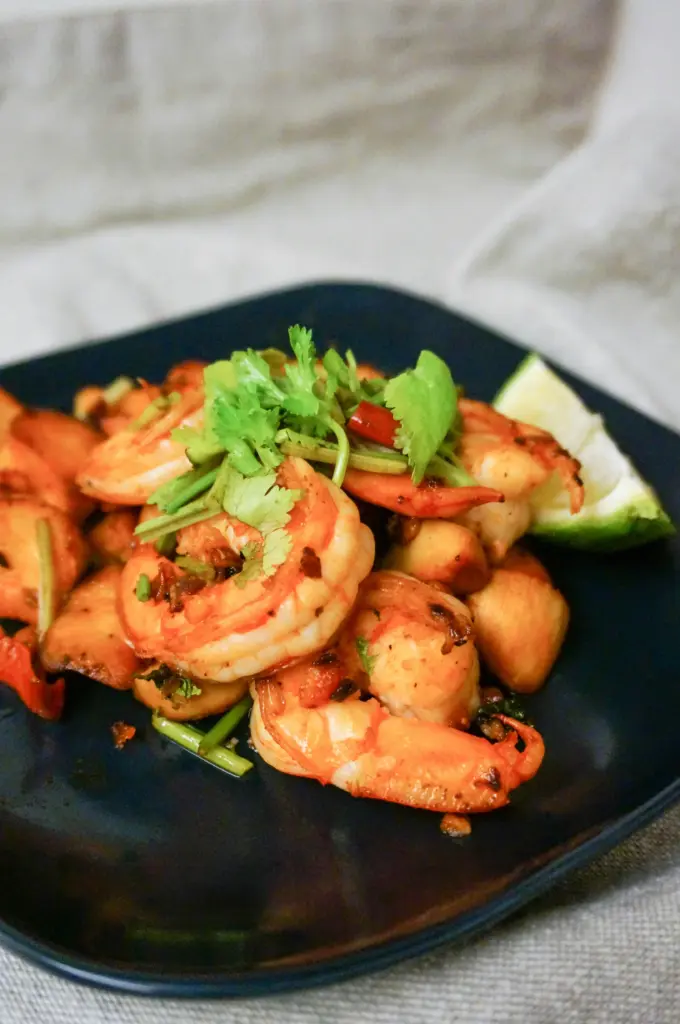
“Is eating shrimp a sin according to the Bible?”
This question might seem straightforward, yet it opens up a deep exploration of biblical dietary laws and their relevance to Christians today.
As Torah-observant Christians, we’ve come to see the Bible, not as a collection of disconnected books, but as a cohesive guide for life, including what we choose to eat. In other words, we believe the entire Bible, including the so-called “Old Testament” food laws, holds true and applicable wisdom for us today.
This became especially apparent for our family when Jereme suffered from symptoms of autoimmune illness shortly following the birth of our first child. Attempting to overcome psoriasis and persistent fungal flare-ups, he started rigorously following the candida diet.
At that time, we didn’t even know what clean and unclean foods were. Later, when we came to understand that the Torah (or God’s instructions for His people) is still as true and relevant today as it was in ancient times, we discovered that God had him on a biblically clean diet before he know what that meant!
Misinterpretations of certain New Testament passages have led many to believe that Christians are free to disregard dietary restrictions outlined in the Old Testament. However, a closer examination within the proper context tells a different story. The Bible, viewed as a unified whole, offers guidance on what is considered clean and unclean, directly impacting our dietary choices.
In this post, we’ll cover:
- The historical and biblical basis for dietary laws. Specifically, we’ll look at Genesis 7:2 and Leviticus 11:9-12 as foundational texts for understanding clean and unclean things.
- How New Testament passages like Mark 7:18-23, Acts 10:11-16, and 1 Timothy 4:3 have been often misinterpreted regarding dietary laws.
- The importance of biblical dietary laws for health and spirituality, highlighting the balance between physical health and spiritual obedience.
As we journey through Scripture together, let’s explore how God’s word answers the question “is eating shrimp a sin in the Bible” – along with other questions of food – seeking to align our lives more closely with His will, both in spirit and in practice.
(Side note: the first law ever given in the garden of Eden was food related! Eve disobeyed God’s instruction, and well … here we are.)
Join us as we delve into the biblical foundation of dietary laws, exploring how these ancient guidelines offer timeless wisdom for our health and holiness.
The Biblical Foundation of “Jewish” Dietary Laws
The dietary instructions and other commandments are often labeled “Jewish” and thought to have only been “for the Jews”.
But the roots of dietary laws stretch deep into the fabric of biblical history, long before the nation of Israel was established and the Torah written down by Moses.
Genesis 7:2 stands as a testament to this, where God commands Noah to take into the ark seven pairs of every kind of clean animal and one pair of every kind of unclean animal. This directive, given in a pre-Sinai context, underscores the existence and recognition of clean and unclean food distinctions well before the food laws were formally given to the Israelites.
This begs the question … if “clean” and “unclean” laws were defined before the so-called “law of Moses” was given, is “Mosaic Law” even an accurate term to describe the Torah?
Traditionally defined as “the first five books of the Bible”, the word “Torah” actually means instructions.
And if we view God as our loving Father in heaven, it makes sense that He would operate as any good father would, by giving us instructions that help to keep us out of trouble – because he loves us and wants us to be blessed. I believe this verse in Deuteronomy perfectly sums up our God’s heart for His people:
“I call heaven and earth as witnesses today against you, that I have set before you life and death, blessing and cursing; therefore, choose life, that both you and your descendants may live.”
Deuteronomy 30:19
Read in context, and put in terms a child can understand, this is a plea for God’s people to choose to obey his loving instructions so we don’t get hurt! (More on that later…)
What does the Bible say about eating shrimp?
The book of Leviticus further elaborates on these distinctions, providing clear guidelines on what is considered clean and unclean among the living creatures of the sea:
“These shall ye eat of all that are in the waters: whatsoever hath fins and scales in the waters, in the seas, and in the rivers, them shall ye eat. And all that have not fins and scales in the seas, and in the rivers, of all that move in the waters, and of any living thing which is in the waters, they shall be an abomination unto you.”
Leviticus 11:9-12
Shrimp, lacking fins and scales, fall squarely into the category of unclean animals, as defined by these verses.
Our personal journey towards understanding and implementing these dietary laws came from a place of health crisis and spiritual seeking. Jereme’s health challenges led us inadvertently to a diet that aligned with biblical instructions on clean and unclean foods—before we fully understood or embraced these principles ourselves. This discovery was not just a testament to the wisdom of God’s instructions but also a pivotal moment in our spiritual and physical healing journey.
The significance of these dietary laws extends beyond mere food preferences or religious rituals. They embody a holistic approach to health, spirituality, and obedience to God. By adhering to these guidelines, we align ourselves with God’s design for creation and demonstrate our commitment to living according to His word.
As we explore the historical and biblical foundation of these dietary rules, it becomes evident that they are not outdated edicts but relevant, healthful instructions from our Creator. These laws were given for our benefit, designed to protect us from harm and guide us towards a life of holiness and health.
The journey of rediscovering and living out these ancient principles has been transformative, offering us a deeper understanding of God’s care for every aspect of our lives, including what we consume.
As Torah-observant Christians, embracing the full counsel of Scripture, including the food laws, has not only enriched our spiritual walk but has also brought significant improvements to our physical health.
As we continue to explore the depths of Scripture, let’s keep in mind the harmony and continuity between the Old and New Testaments – the whole of His-story – recognizing that God’s instructions, including those regarding our diet, are given out of love and designed for our ultimate good.
Understanding Common Misinterpretations of New Testament Passages
The New Testament, often cited to argue the abolishment of “Old Testament” dietary laws, actually provides continuity when understood in its proper context. Misinterpretations of key passages have led many to overlook the enduring relevance of these instructions.
Mark 7:18-23 – The Heart of the Matter
In Mark 7:18-23, Jesus addresses the Pharisees’ concern over His disciples not washing their hands according to the traditions of the elders, using this moment to teach a deeper truth about purity. Jesus explains that it’s not what enters the body that defiles a person, but what comes out of their heart. This discussion was aimed at critiquing the Pharisees’ external approach to purity, not nullifying God’s dietary instructions. The focus was on the heart’s condition and the source of true defilement—evil thoughts, theft, murder, and other sins that arise from within. He rebukes them for holding the “tradition of the elders” (NIV) above the commandments of God.
Acts 10:11-16 – Peter’s Vision About People, Not Food
Acts 10:11-16 recounts Peter’s vision of a sheet descending from heaven, filled with all kinds of animals, including those deemed unclean. While initially perplexing, the vision’s purpose was clarified in Acts 10:28, where Peter states that God showed him not to call any person impure or unclean. This vision was about breaking down the barriers between Jews and Gentiles, emphasizing the inclusion of all people in God’s salvation plan, rather than changing dietary laws.
1 Timothy 4:3 – A Warning Against False Asceticism
1 Timothy 4:3 warns against those who “forbid people to marry and order them to abstain from certain foods”:
“But the Spirit explicitly says that in later times some will fall away from the faith, paying attention to deceitful spirits and teachings of demons, by means of the hypocrisy of liars seared in their own conscience as with a branding iron, who forbid marriage and advocate abstaining from foods which God has created to be gratefully shared in by those who believe and know the truth.”
Those who “believe and know the truth” understand which of God’s creatures are considered “food” – intended for human consumption – and which ones aren’t. Shrimp and other bottom feeder shellfish are among those which are unclean, and the people of Israel living in these ancient times (i.e. the writer of 1 Timothy) would have known that.
In contrast, the people Paul was warning against were those who promoted false teachings like asceticism—the practice completely avoiding and rejecting all forms of worldly comfort, even those things deemed “good” by our Creator since the very beginning (such as clean foods)—to achieve greater spirituality.
The passage further emphasizes the importance of receiving good things with prayer and thanksgiving—once again echoing that what really matters is the condition of the heart.
If your heart is truly aligned with God’s will, then obedience to his instructions (including the dietary ones) becomes second nature.
Our family’s experience echoes these truths. The dietary changes we made, initially for health reasons, aligned with biblical principles before we fully understood their spiritual significance. This alignment was not coincidental but a divine orchestration that has led us to a deeper, more holistic faith practice.
Understanding these passages in their correct context does not diminish the OT laws but instead reveals the comprehensive nature of God’s instructions. They are not merely about what we eat but also about our spiritual health and how we view others in the light of God’s grace and salvation.
The misinterpretations of these texts have obscured the richness of God’s instructions, intended for our well-being. As we delve deeper into the Scriptures, we uncover a harmonious message that guides not only our spiritual lives but also our physical health and interactions with others.
As we journey through Scripture, seeking to align our lives with God’s will, let us approach His word with open hearts, ready to embrace the fullness of His teachings. The path of a Torah-observant Christian is one of discovery, where ancient wisdom illuminates our modern lives, guiding us toward health, holiness, and a deeper relationship with God.
As we seek to answer the question, “is eating shrimp a sin in the Bible?” let’s examine the early church’s dietary practices and how they reflect a continuation of biblical dietary principles.
Is Eating Shrimp a Sin in the Bible? The Early Church and Dietary Practices
The practices of the early church, as recorded in the New Testament and historical documents, reveal a community striving to live out the teachings of Jesus and the apostles, including adherence to dietary laws. This section examines how the early believers navigated the intersection of Old Testament commands and the freedom proclaimed in the New Testament.
Acts 15: The Jerusalem Council
In Acts 15, the Jerusalem Council addresses concerns about Gentile believers and the Law. Verses 19-20 record James’ conclusion, advising abstention from “food polluted by idols, from sexual immorality, from the meat of strangled animals, and from blood.”
This decision highlights a nuanced approach to the Torah, emphasizing aspects particularly relevant to the fledgling church’s unity and purity. The council’s directive reflects a desire to honor God’s commands while fostering fellowship between Jewish and Gentile believers. It acknowledges the significance of dietary instructions, not as means for salvation, but as a matter of conscience and respect for the community’s diverse backgrounds.
It also highlights a particular dietary command – that of abstaining from “food polluted by idols” – as being among the more important ones for new believers to keep. James goes on to say that they would gradually learn the rest of the commandments as they begin to hear the Torah taught in the synagogues each week during their Sabbath day observance (another so-called “Old Testament” law still kept by the early church believers after the death and resurrection of Yeshua / Jesus Christ):
“For Moses has had throughout many generations those who preach him in every city, being read in the synagogues every Sabbath.”
Acts 15:21
Dietary Practices as a Reflection of Faith
Our family’s journey towards understanding and implementing biblical dietary laws underscored their relevance not just for personal health, but as an expression of faith and obedience to God. Like the early church, we found ourselves navigating a landscape where faith, culture, and tradition intersect. Adhering to these dietary laws became a tangible way to honor God’s design and to witness to the holistic nature of His teachings.
The early Christians’ adherence to dietary laws, as evidenced in Acts and other New Testament writings, was not about legalism. It was about living in a manner consistent with their faith and respectful of their community’s diverse makeup. They sought to embody the gospel’s transformative power in every aspect of life, including their dietary habits.
Reconciling Old and New Covenant Perspectives
The early Christian church’s approach to food laws illustrates how keeping God’s instructions is a demonstration of our faith in Christ Jesus.
We’ve probably said this a thousand times, but it bears repeating:
Obedience to the Torah is the fruit of our salvation – not the root! In other words, we don’t obey the Torah to obtain salvation – we do it, because we are saved by grace!
The adherence to biblical principles as a natural result of our new covenant freedom in Jesus is a hallmark of the early believers’ faith practice. It challenges us to consider how we, too, can faithfully navigate these principles in our contemporary context.
For our family, and for many Torah-observant Christians, returning to God’s instructions has been a journey of faithfulness and discovery. It has deepened our understanding of God’s care for us, not only spiritually but physically. By embracing these ancient guidelines, we’ve found a richer, more integrated way to live out our faith in a modern world.
As we continue to explore the rich tapestry of God’s word on dietary matters, let us do so with open hearts and minds, ready to learn and grow in our understanding and practice. The early church’s example offers us valuable insights into living a life that is pleasing to God, marked by obedience, health, and holiness.
Next, we’ll delve into the health perspectives on eating shrimp and shellfish, contrasting modern dietary habits with the wisdom found in Scripture.
Health Perspectives on Eating Shrimp and Shellfish
The biblical dietary laws distinguishing between clean and unclean animals, including the prohibition against eating shellfish like shrimp, are not only spiritually significant but also bear implications for physical health. Modern nutritional science offers insights that echo the wisdom of these ancient guidelines, providing further insight into the answer to the question, “is eating shrimp a sin in the Bible?”
The Nature of Shrimp and Shellfish as Bottom Feeders
Shrimp and other shellfish serve as bottom feeders in their aquatic ecosystems, playing a crucial role in cleaning the environment by consuming dead matter and pollutants. While this function is vital for maintaining the health of marine habitats, it also means that these creatures can accumulate harmful substances in their bodies. Leviticus 11:9-12, by designating creatures without fins and scales as unclean, implicitly warns against the consumption of animals that may pose health risks due to their dietary habits.
Is Eating Shrimp a Sin in the Bible? Health Concerns and Modern Research
Modern research has validated concerns about the potential health risks associated with consuming bottom feeders. Studies have shown that shrimp and similar shellfish can contain high levels of toxins, heavy metals, and other pollutants absorbed from their environment. These substances can pose significant health risks to humans when consumed in large quantities or over an extended period.
For us, the decision to follow biblical dietary laws was initially motivated by health concerns. Jereme’s experience with autoimmune issues led us to eliminate certain foods from our diet, including shellfish, inadvertently aligning with the biblical distinctions between clean and unclean foods. This dietary change, alongside other lifestyle adjustments, resulted in noticeable improvements in his health, underscoring the practical benefits of adhering to these ancient guidelines.
What Other Foods are Unclean According to the Bible?
Leviticus 11 contains a detailed list of clean and unclean foods, including:
Birds
Several types of birds are listed as unclean for consumption in Leviticus and Deuteronomy:
“…the eagle, the bearded vulture, the black vulture, the kite, the falcon of any kind, every raven of any kind, the ostrich, the nighthawk, the sea gull, the hawk of any kind, the little owl, the cormorant, the short-eared owl, the barn owl, the tawny owl, the carrion vulture, the stork, the heron of any kind, the hoopoe, and the bat.”
Leviticus 11: 13-19 ESV
The specific mention of these birds indicates a broader prohibition against consuming predatory or scavenging birds, which are more likely to consume unclean animals themselves.
Land Animals
Leviticus 11:4-8 and Deuteronomy 14:7-8 detail unclean land animals:
“The camel, because it chews the cud but does not part the hoof, is unclean to you. And the rock badger, because it chews the cud but does not part the hoof, is unclean to you. And the hare, because it chews the cud but does not part the hoof, is unclean to you. And the pig, because it parts the hoof and is cloven-footed but does not chew the cud, is unclean to you.”
Winged Insects
Leviticus 11:20-23 addresses winged insects, allowing for the consumption of certain types, specifically those that have jointed legs above their feet, enabling them to leap on the earth.
Swarming Creatures
The term swarming creatures often refers to various types of living beings that move in large numbers or swarms, including certain types of insects and small animals. Leviticus 11:29-31 lists unclean swarming creatures of the ground, which the Israelites were to regard as detestable.
(It’s interesting to note that aside from pork and shellfish, most of us would not even consider touching many of the unclean creatures listed in Leviticus 11 with a 10-foot pole, much less consuming them with our mouths!)
Is Eating Shrimp a Sin in the Bible? A Holistic View of Dietary Laws
The biblical prohibitions against eating shrimp, shellfish and other forbidden foods are not arbitrary but are grounded in a holistic understanding of health and well-being. All of God’s laws—including the food laws, Ten Commandments, and other instructions that are often called “moral laws” or “ceremonial laws”—reflect His care for His creation, providing guidelines that protect us from potential harm while guiding us toward a diet that promotes physical and spiritual health.
Embracing these dietary instructions has been a journey of discovery for us, revealing the depth of God’s wisdom in guiding His people toward practices that nurture our entire being. As we continue to grow in the knowledge of God and explore and apply these principles, we are reminded of the intricate ways in which our spiritual beliefs and physical health are intertwined.
So, Is Eating Shrimp a Sin in the Bible Or Not?
This brings us full circle and back to the original question posed by the title of this post…
“Is eating shrimp a sin in the Bible?”
1 John 3:4 defines sin as transgression of the Torah, and we’ve established that the Torah is our Heavenly Father’s loving instructions for his people – meant for our good.
Based on that definition, and everything we’ve covered here, I’ll let you come to your own conclusion regarding the answer to that question. 😉
But I’d also like to emphasize that our decision to eat or not eat certain foods should not simply be about adhering to a checklist of standards – especially if we can’t recognize the significance of those standards and why they were given in the first place.
The question, “is eating shrimp a sin in the Bible” is more than just a matter of right or wrong.
If we view the dietary laws and other commandments as an arbitrary checklist of rules that serves no real purpose, then we might as well not follow them at all. If you came into this post with that understanding, I’d encourage you to shift your perspective and consider what it means to address God as “Abba, Father”. Consider what his role as a loving Father truly implies…
If you have children yourself, then hopefully this is resonating with you! But just to drive the point home, here’s an example:
When you tell your kids not to jump on the furniture because they might:
- Destroy said furniture, giving you and them no place to sit or sleep, and/or
- Fall and bump their heads, or worse – break a limb!
It’s not for kicks and giggles.
It’s not because you want to prove to them that they won’t be able to follow such a “silly, arbitrary rule.”
And it’s certainly not because you want to test them to see if they’ll listen to you or not…
It’s because you don’t want scenarios 1 or 2 to happen!
It’s because you want to continue watching them smile and laugh and play without getting hurt!
It’s because you love them and want what’s best for them.
And they might not understand why you impose such rules. They might pitch a fit. They might call you a “mean mommy or daddy.”
They might even choose to defy your instructions and end up getting hurt. But that will (hopefully) teach them not to keep defying your instructions over and over.
(A quick read through the book of Exodus highlights just how stubborn the children of Israel were when it comes to that … and not much has changed.)
The biblical dietary laws offer more than just spiritual symbolism; they embody practical wisdom for maintaining health and well-being. Our journey towards understanding and living out these principles has been transformative, highlighting the relevance of God’s words in guiding every aspect of our lives, including our dietary choices.
As Christians, we are called to honor God not only with our hearts and minds but also with our bodies (1 Cor. 6:19-20). By adhering to the dietary guidelines set forth in Scripture, we demonstrate our commitment to living according to His will, embracing a lifestyle that promotes holiness, health, and harmony with creation.
Let us continue to seek wisdom in Scripture, allowing the Holy Spirit and word of God to shape our lives, our diets, and our health, as we strive to live in obedience to His commands.
This brings us to the end of our detailed examination of biblical dietary laws. As we’ve journeyed through Scripture and personal testimony, we’ve discovered the timeless wisdom and practical guidance God provides for our lives, including what we choose to eat. Let’s carry forward this holistic approach to faith, integrating the spiritual and physical aspects of our lives in a way that honors God and promotes our well-being.