Table of Contents
Welcome to sourdough bread with fresh milled flour made easy! Whether you’re new to sourdough, or you’ve been baking sourdough for years and are just venturing into fresh milled flour, this is one of the most beginner-friendly recipes you’ll find.
I started baking with fresh milled flour about five years ago. At the time, I was using the commercial yeast packets you can buy in grocery stores. I didn’t really know much about sourdough bread except that the loaves I had tasted had a tangy taste, and to be honest, I wasn’t sure I liked it all that much…
But then I heard about the nutritional benefits of sourdough, and how even people with gluten intolerances can often eat it without any issues. I was already baking with fresh-milled flour, which is a nutritional powerhouse in and of itself. Adding sourdough felt like a no-brainer.
Considerations When Making Sourdough Bread With Fresh Milled Flour
As I ventured into the world of sourdough, I realized more and more that fresh-milled flour was the way to go, mostly because I don’t really like sourdough bread that’s super sour.
Consideration #1: Fresh Milled Flour & Sourdough are Besties!
Something a lot of people don’t know, especially if they’re new to fresh milled flour, is that it absolutely loves sourdough starter. When you add starter to fresh milled flour, the dough ferments a lot faster than white flour, due to the presence of more enzymes and nutrients that feed the starter. So you end up with a nutritionally dense loaf that doesn’t taste too sour…
But the flavor still packs a punch!
Consideration #2: Fresh Milled Flour & Water are Also Besties!
In addition to fermenting quickly, fresh milled flour also absorbs more water than white flour, due to the presence of bran and germ, which contain more fiber.
While it is possible to sift out those components, you’d be defeating the purpose of baking with fresh milled grains in the first place. The bran and germ are what contain all the nutrients that make fresh milled bread so healthy for you.
So we choose not to sift in our household, but … you do you!
Because it absorbs more water, I’ve found that higher hydration dough often works best for achieving a more open crumb and texture. This recipe is about 85% hydration.
Higher hydration doughs are wetter and stickier, and therefore usually more difficult to knead and shape. But because fresh milled flour is so absorbent, I’ve actually found the kneading portion of this recipe pretty easy!
Consideration #3: The Appearance and Texture Will Be Different
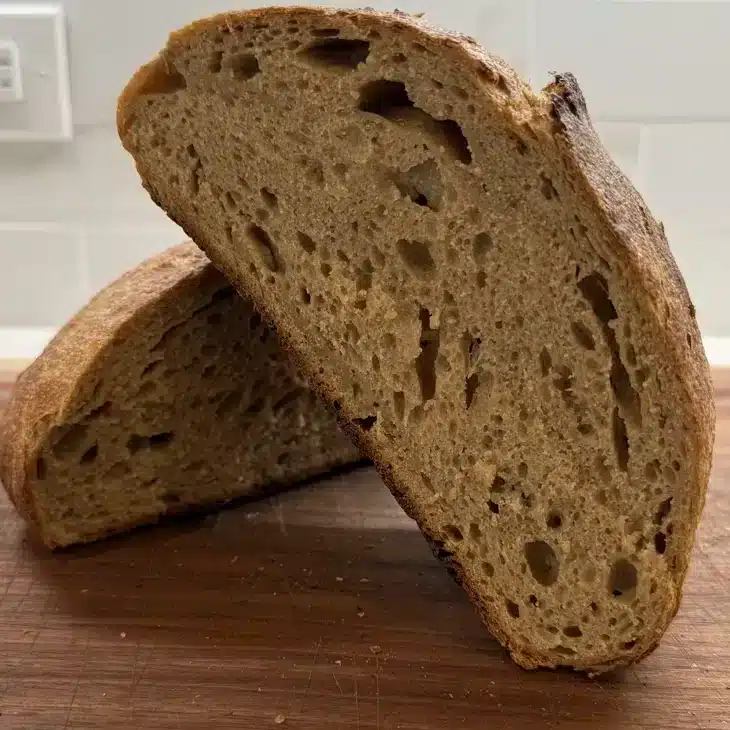
One thing that’s a bit discouraging in the fresh milled flour community is that people tend to expect that same fluffy texture and airy, open crumb out of their fresh milled loaves that white flour yields.
And I’m here to tell you, that’s basically like eating a Beyond Burger and expecting it to taste and feel exactly like a ground beef patty… it’s just not gonna happen.
Though you can come close by using various techniques (which I may cover in another post), the texture will not be the same as that loaf you bought from the store or even the one you made at home with store-bought flour.
This is due to the coarse texture of the bran in fresh milled flour, which “cuts” through the gluten strands, resulting in a smaller rise and a denser texture with less oven spring.
A longer autolyse (soaking the flour in water before adding starter) can help soften the bran, but it’s still not going to be the same as what you’re used to.
The trade-off? In my opinion, the flavor and nutritional benefits of freshly milled flour sourdough bread far outweigh the appearance and texture of bread made with conventional white flour.
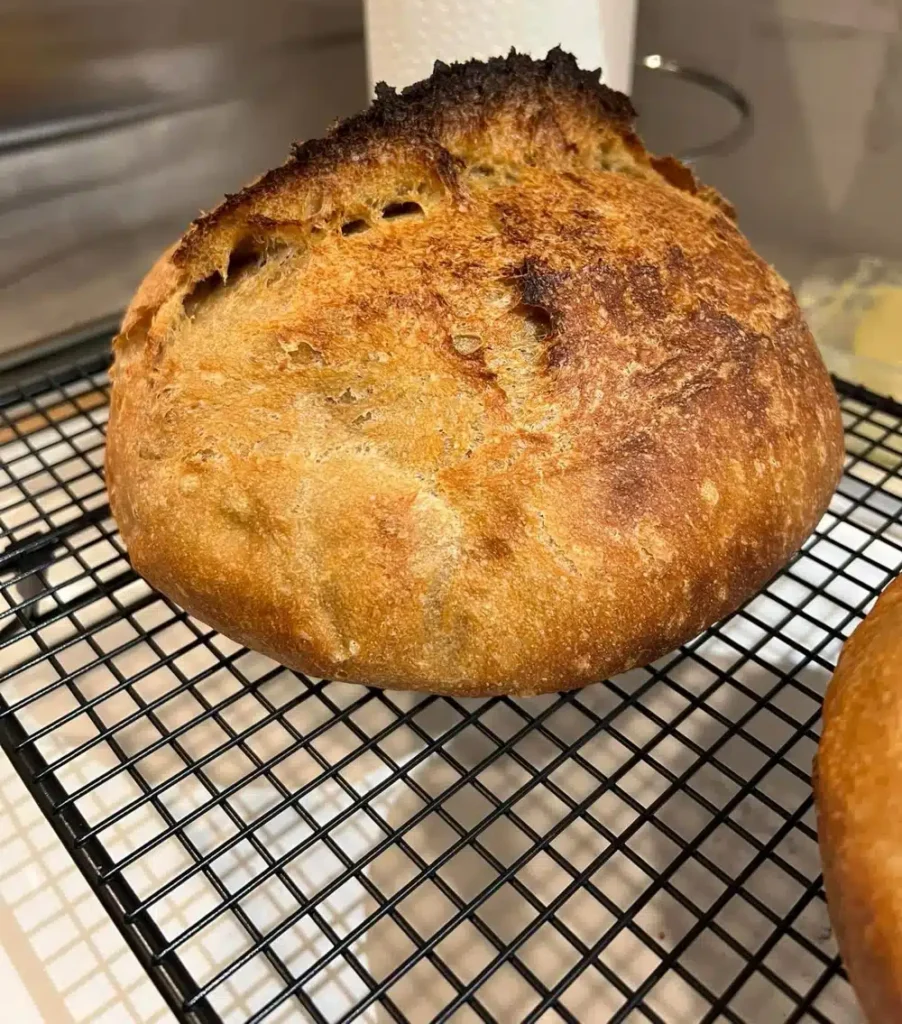
And even though the bread is more dense, it’s still soft and and chewy with a slight tang – just the way I like it!
How to Make Sourdough Bread with Fresh Milled Flour
The process of making 100% fresh milled flour sourdough bread is simple and fast if you’re using this recipe:
- Step 1: Combine the flour and water and autolyse for 1 hour.
- Step 2: Add your starter and salt and gently knead by hand until fully incorporated.
- Step 3: Let the dough rise 20 to 30% (this only takes a few hours with fresh milled flour!)
- Step 4: Shape, score and bake (scroll down to the bottom of this post for the full recipe).
That’s it! It really is that simple. Unlike your conventional white flour loaves, you don’t need the dough to double in size, and you don’t need an overnight cold-proof.
If you prefer a more sour taste, you can shape and refrigerate your loaves for the entire bulk fermentation period, but you’re still aiming for a 20 to 30% rise. So while it does take longer (resulting in more tang), the waiting time is not nearly as long. I definitely wouldn’t leave it overnight, as fresh milled flour can quickly overproof.
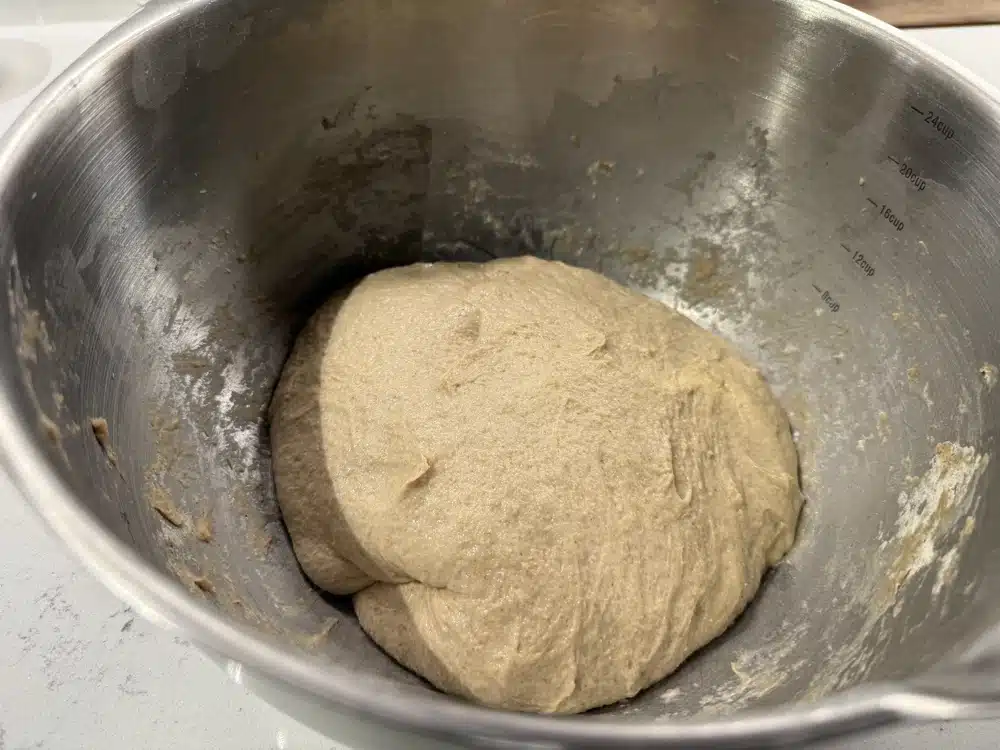
You also don’t need to spend a lot of time kneading the dough. In fact, I’ve had the best results with minimal kneading and zero stretch and folds. If you’re more “type A” and enjoy the hands-on process of baking bread, you can do a stretch and fold once an hour. But I highly recommend just letting it do its thing.
A Note About Measurements
I highly recommend using a digital scale to weigh your ingredients, which is why I’ve provided measurements in grams instead of cups.
However, it’s important to note that the absorbency of fresh milled flour and your time-to-rise can vary depending on the type of grain used and the temperature and humidity levels in your home. If your kitchen is warm, your rise time will be shorter. The moisture levels of your grains can also vary from one batch to the next depending on the harvesting, drying, and storage conditions of the grain supplier. So your ratio of flour to water could be more or less than what this recipe calls for.
For this reason, I recommend gradually combining the flour and water making a note of the overall texture and stickiness before adding more of either ingredient.
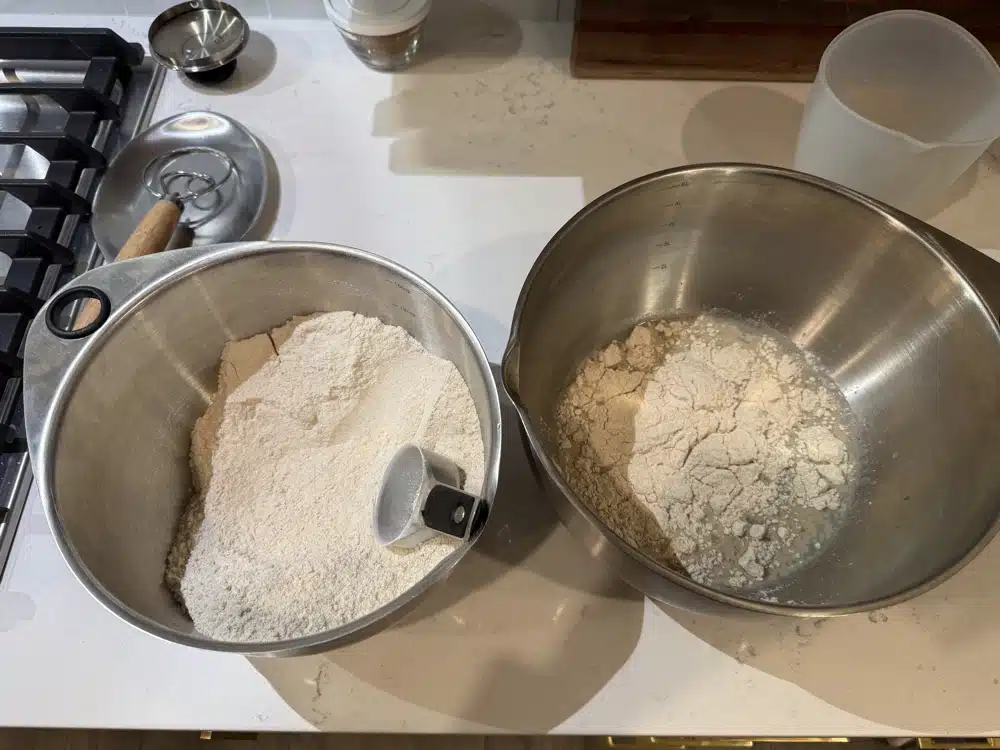
Before adding your starter, the dough will be a bit dry. Once the starter has been added, you should expect some stickiness, as this is a higher-hydration recipe. But the dough should still be workable and not a goopy mess. You may need to try this recipe a few times and experiment with slightly varied amounts of flour and water before finding what works best for you.
Shaping and Scoring
To shape the loaves, stretch each half into a square or small rectangular shape and fold into thirds. Rotate 90 degrees and fold into thirds again. Then using your hands and a bench scraper, continue rotating the dough to form a round boule. I do this several times with a 15-minute bench rest between each shaping until the loaves retain their shape well.
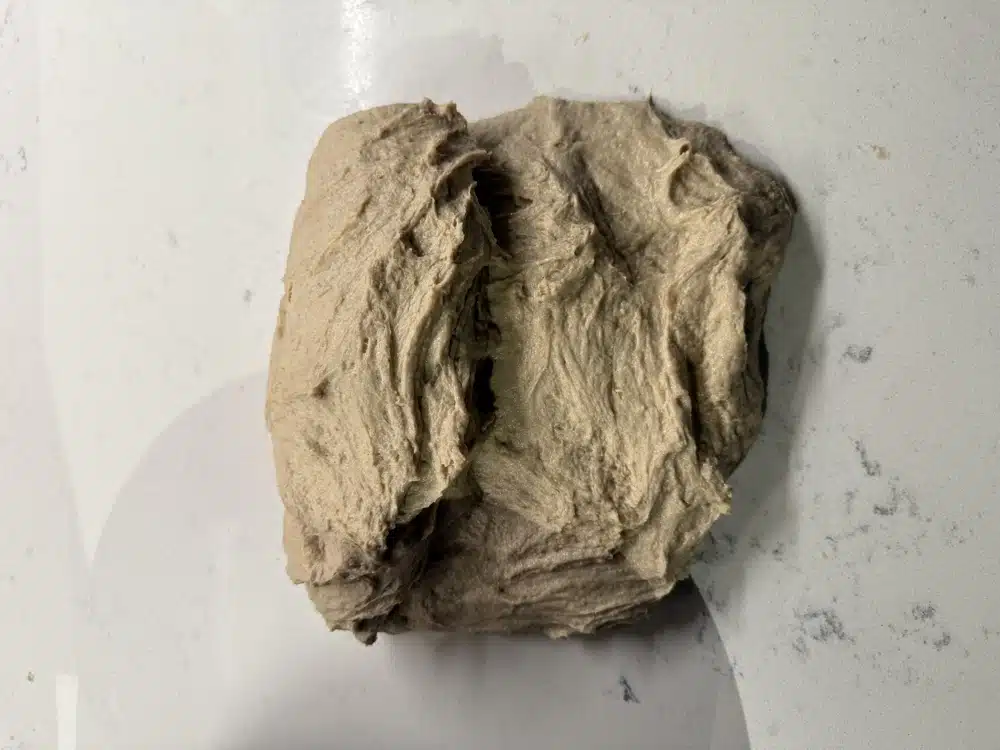
I don’t make artisan loaves with pretty designs. As a mom of six, I don’t have the time or artistic gifting to make that happen on the regular. Plus, our family will go through a whole loaf in 1 to 2 days, so I don’t see the point in making a beautifully designed loaf of bread that’s going to get eaten so quickly.
But it is important to score the loaf before baking so the steam has an escape route.
Using a sharp bread lame angled at about 45 degrees, I make one quick, shallow cut from top to bottom in the shape of a semicircle. As the bread rises, it may form an “ear”, which is a flap of crust that resembles a rabbit’s ear when the bread is sliced.
When that happens, I know it’s gonna be a good loaf!
The ear is pretty much all I need to feel like I made a piece of art. Otherwise, my goal is simply to feed my family with nutrient-rich food that they love, and bread is at the top of their list.
How to Store Fresh Milled Flour Sourdough Bread
Fresh milled flour retains the bran and the germ, which contain oils that that can oxidize more quickly, leading to a lower shelf life than bread made with white flour.
But the good news is, this bread tastes so good, and it’s good for you, which means you’ll probably eat it before it goes bad.
Fresh milled sourdough bread is best stored in an airtight container or bag at room temperature for up to 3 days. After that it should be refrigerated, or frozen for longer storage (3-4 months).
Fresh Milled Flour Sourdough Bread
Equipment
- 1 large mixing bowl
- 1 danish whisk (optional; can mix/knead by hand instead)
- 1 digital kitchen scale
- 2 Dutch ovens
Ingredients
- 850 g hard white wheat flour, freshly milled
- 150 g hard red wheat flour, freshly milled (You can use all hard white wheat for this recipe and eliminate the hard red. You can also experiment with other types of grain. This is the combination that has yielded the best results for me in terms of taste and texture.)
- 850 g water
- 20 g sea salt
- 300 g active sourdough starter (It’s best if your starter was recently fed, within the last 12 hours, and has been sitting at room temperature. If your starter has been refrigerated for some time and is not active and bubbly, you’ll need to make a levain the night before, using 100g unfed starter, 100g flour and 100g water)
Instructions
- Combine the flour and water in a large mixing bowl. Mix by hand or with a danish whisk until there is no more free flour left. Let rest covered for 30 minutes to 1 hour. (This is the autolyse.)
- Add the active sourdough starter and sea salt and gently knead the dough by hand until fully incorporated.
- Let it rest, covered, until the dough rises about 20 to 30%. This is important! Fresh milled flour LOVES sourdough and will ferment much faster than white flour. Unlike with traditional sourdough, you don’t need it to double in size. If desired, you can perform stretch and folds once an hour during this time. The bulk fermentation usually takes about 3 to 5 hours total. Keep a close eye on it! If it rises too much, it’ll overproof and be difficult to shape.
- Preheat 2 dutch ovens at 480 degrees for 1 hour.
- While the oven preheats, shape dough into 2 loaves with a 15-minute bench rest between shaping until each loaf holds its shape well.
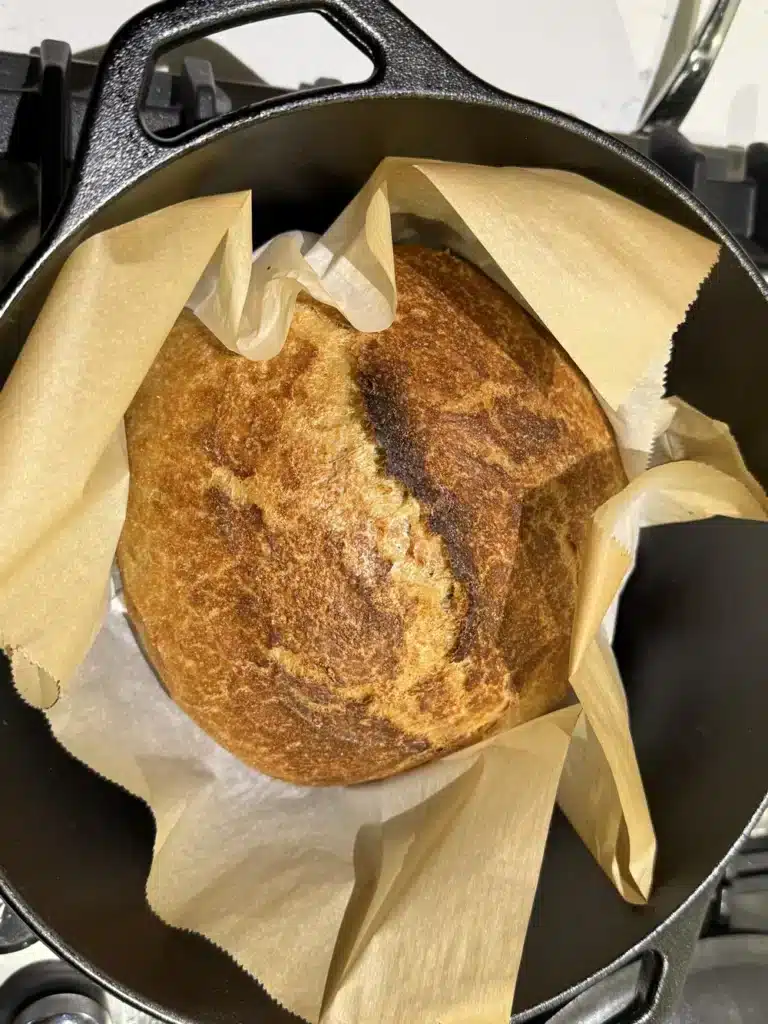
- Place each loaf on a sheet of parchment paper. Score each loaf with a sharp knife, razor blade or bread lame and spritz with a generous amount of water. Lift the parchment paper with the loaves on top and gently place them into the Dutch ovens.
- Bake covered for 30 minutes. Decrease oven temperature to 450 and bake uncovered for 25 more minutes or until the internal temperature reaches 210 degrees F.
Notes
- This is a high hydration dough (around 80%). I’ve found that higher hydration works better for achieving a fresh-milled flour sourdough loaf with a more open crumb and texture.
- Still, don’t expect your typical airy texture and wide open crumb when baking with fresh milled flour! It’s not like white flour. Your loaves will be more dense, but the flavor is out of this world, and the nutritional benefits make it an no-brainer.
- I’ve had the best results, when gently kneading my dough after adding the starter and salt – just enough to fully incorporate those ingredients – and then leaving it alone. You can do gentle stretch and folds once an hour, but I honestly recommend a more hands-off approach. The gluten will develop and you’ll get a good rise if you just let the dough rest and do its thing.
- You can cut this recipe in half if you just want to bake one loaf, or you can divide the dough into 4 pieces and bake smaller loaves for soup bowls!